
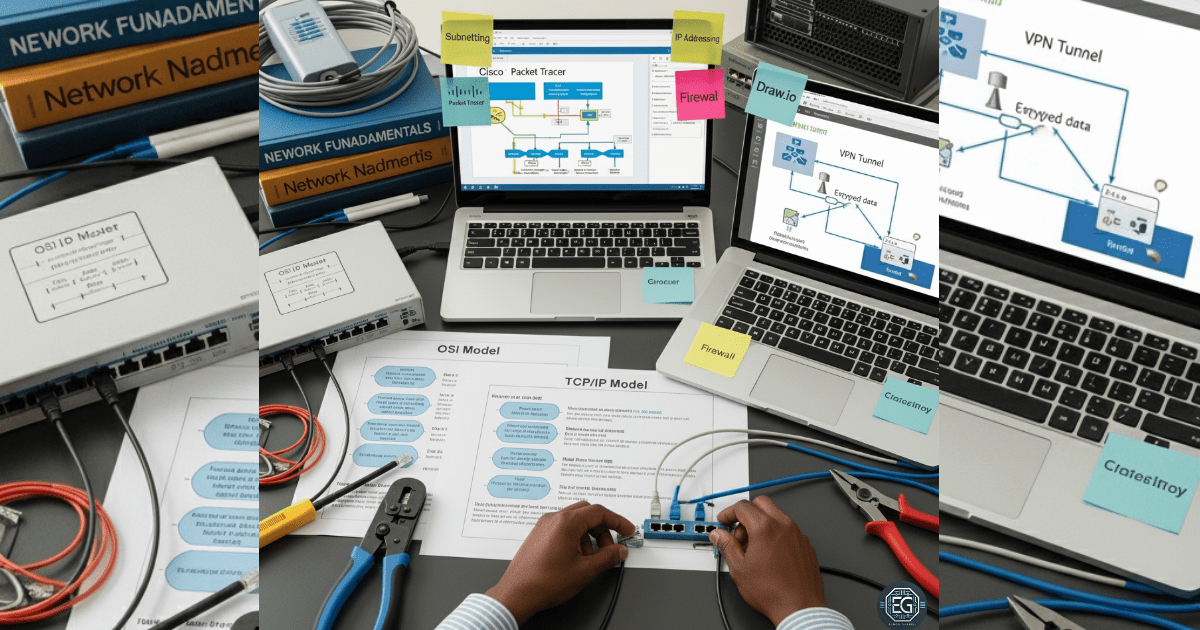
Learning network fundamentals makes cybersecurity easier. This section of the MSAF course was not just theory—it was hands-on work that built real skills used in the field.
Understanding the Basics
I started by learning the OSI and TCP/IP models:
- OSI model: A 7-layer model that explains how data moves through a network
- TCP/IP model: A 4-layer model used in real-world networking
Understanding these models helps with:
- Finding network issues
- Analyzing traffic
- Applying security controls
I also studied common network devices used in real environments:
- Hubs: Send data to all devices (low security)
- Switches: Send data only to the correct device
- Routers: Connect different networks
- Firewalls: Control access and protect systems
Applying the Knowledge
I designed a network for a 100-user business using Draw.io.
This included:
- Workstations and servers
- Network switches
- A firewall and DMZ for security
This helped me understand how network layout affects security.
Building a Real Network
Next, I used Cisco Packet Tracer to build a larger network for a 1,000-user organization.
Tasks Included
- Creating LANs, WANs, and VLANs
- Configuring ACLs and NAT
- Setting up an IPSec VPN
- Troubleshooting configuration issues
This lab took over 10 hours and required detailed problem-solving. I also created a troubleshooting guide based on the issues I faced.
Key Tasks Completed
- Studied OSI and TCP/IP models
- Learned how enterprise network devices work
- Designed a static network diagram
- Built a working network in Packet Tracer
- Configured VLANs, ACLs, NAT, and VPNs
Note: Full lab reports and videos are available if needed.
Conclusion
This project showed that theory alone is not enough. Hands-on work is required to understand how networks really function.
Key Takeaways
- Built real network designs from scratch
- Configured core networking features like VLANs and VPNs
- Improved troubleshooting and documentation skills
- Applied theory to real-world scenarios
- Created a portfolio-ready project
Ethical Disclosure
In line with my academic pledge at Mossé Cyber Security Institute (MCSI), official solutions are not shared.
This work reflects my own understanding and practical skills. Full documentation can be provided to recruiters or mentors if needed.