
Specialized Capabilities: Security Labs · Infrastructure Diagnostics · Enterprise IT Operations
This section highlights advanced training and lab-based certifications that complement my core expertise in system security and infrastructure management. These credentials reflect practical development in security testing and enterprise IT operations.
Certifications
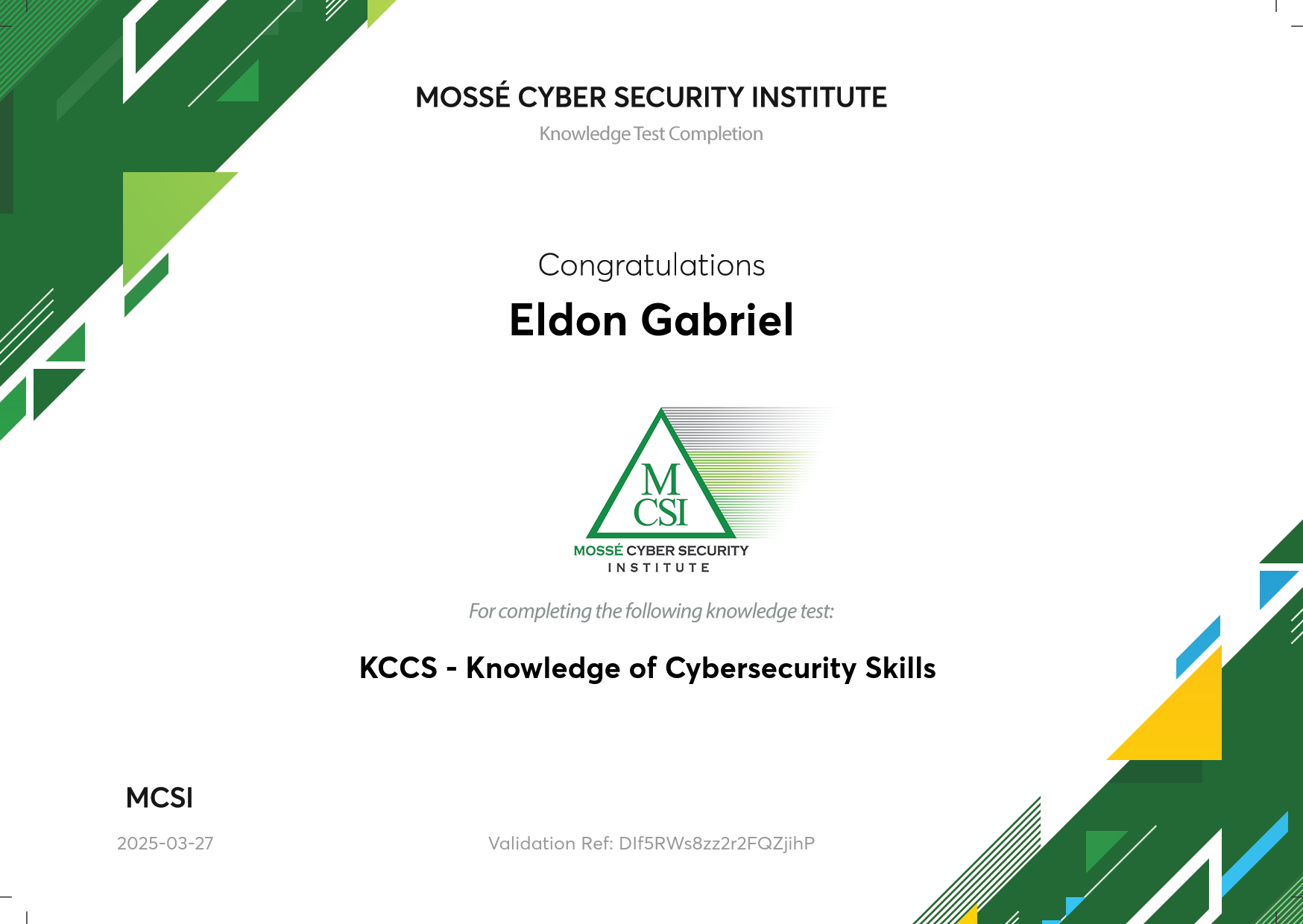
KCSS - Knowledge of Cybersecurity Skills
The KCSS (Knowledge of Cybersecurity Skills) certification validates my theoretical understanding of core cybersecurity principles. It covers key topics such as network security, threat analysis, and incident response, providing a strong foundation for further cybersecurity specialization.
Core Capabilities: Threat Analysis · Incident Response · Network Security
Professional Solutions & Domain Expertise
- Network Security: Understanding of key concepts in securing network infrastructures against potential vulnerabilities and attacks.
- Threat Analysis & Response: Proficiency in identifying, analyzing, and responding to cybersecurity threats in a structured manner.
- Incident Management: Applying best practices in handling cybersecurity incidents, ensuring quick recovery and mitigation.
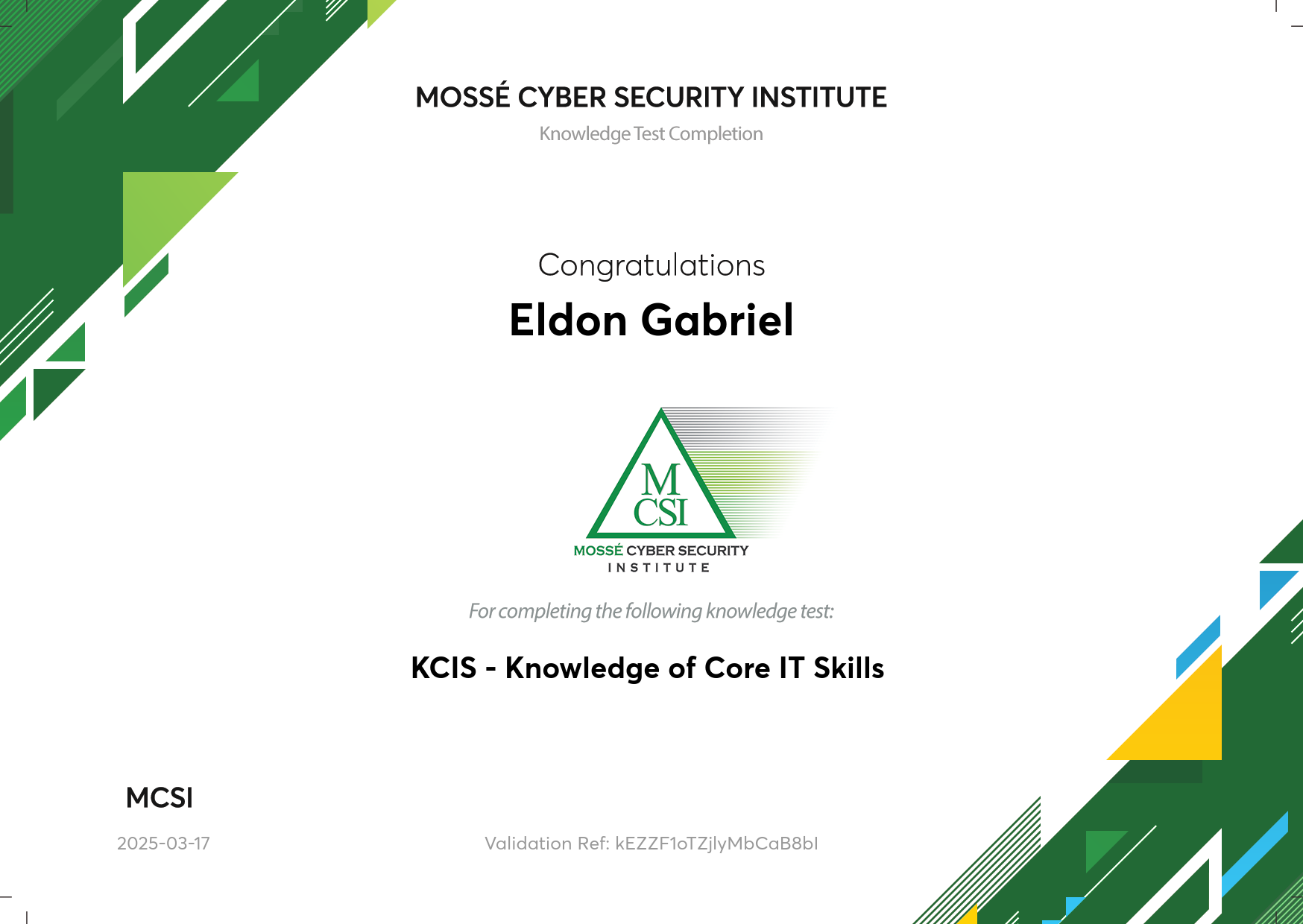
KCIS - Knowledge of Core IT Skills
The KCIS (Knowledge of Core IT Skills) certification demonstrates my grasp of fundamental IT concepts, including hardware, software, networking, and troubleshooting. It serves as a solid foundation for my technical career and further exploration of IT domains.
Core Capabilities: IT Infrastructure · Networking · Troubleshooting
Professional Solutions & Domain Expertise
- IT Infrastructure: Solid understanding of the core components of IT systems, ensuring effective and efficient management of hardware and software.
- Networking Fundamentals: Understanding the foundational principles of networking, protocols, and IP addressing.
- Troubleshooting: Diagnosing and resolving IT-related issues across both hardware and software layers.
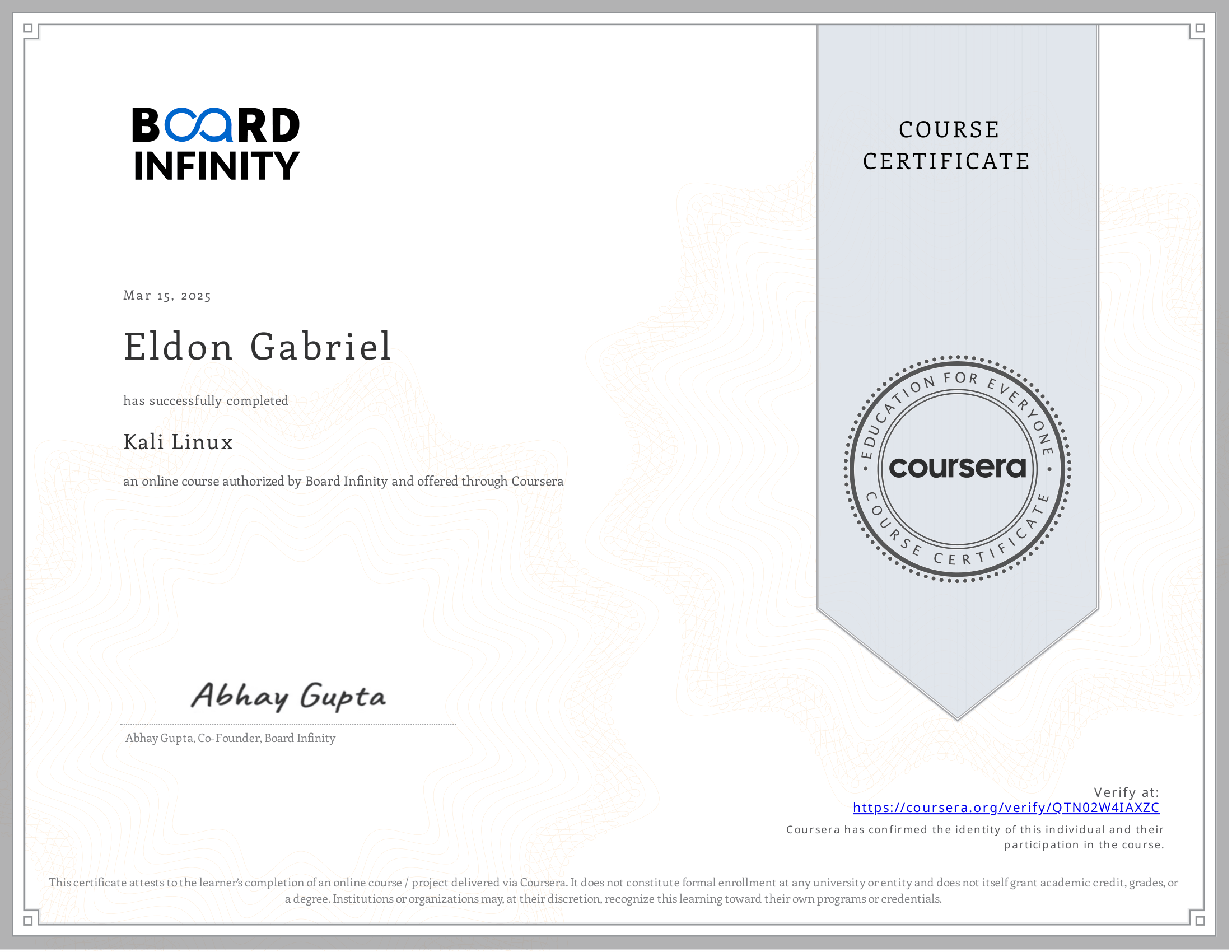
Kali Linux - Completed on March 15, 2025
The Kali Linux certification enabled me to gain a foundational understanding of Kali Linux and its role in cybersecurity. I developed practical skills in installing, navigating, and utilizing Kali Linux tools for network monitoring, penetration testing, and vulnerability assessment.
Core Capabilities: Vulnerability Assessments · Network Security · Penetration Testing
Professional Solutions & Domain Expertise
- Vulnerability Assessments: Conducting security assessments and identifying weaknesses within IT systems and networks.
- Penetration Testing: Using Kali Linux tools to simulate cyberattacks, helping to identify and mitigate potential security risks.
- Network Monitoring & Analysis: Monitoring network traffic and analyzing system behavior to identify abnormal activities and threats.
- Ethical Hacking: Understanding the basics of ethical hacking, including legal aspects and best practices for penetration testing.
Introduction to Server Administration Services
Channel 9 / Microsoft Tutors via Alison
The Introduction to Server Administration Services course validates my understanding of the fundamental practices required to manage enterprise server environments. It covers essential services such as name resolution, directory services, and secure file-system management.
Core Capabilities: DNS Resolution · NTFS Permissions · Directory Services
Professional Solutions & Domain Expertise
- Access Control: Implementing NTFS permissions and file-system encryption (EFS) to secure sensitive data at rest.
- Network Identity: Managing DNS configurations to ensure reliable name resolution and resource availability within a domain.
- Policy Enforcement: Understanding the lifecycle of Group Policy Objects (GPOs) for centralized system management and security.
Master Microsoft 365: Essential Skills and Beyond
LinCademy via Alison
The Master Microsoft 365 course demonstrates proficiency in managing hybrid cloud environments. It focuses on the administration of M365 tenants, emphasizing data governance, secure collaboration, and compliance within the Office 365 ecosystem.
Core Capabilities: SaaS Security · Data Governance · Cloud Collaboration
Professional Solutions & Domain Expertise
- Cloud Governance: Evaluating data protection strategies and compliance measures within the Office 365 environment.
- Tenant Administration: Navigating M365 admin interfaces to manage document-sharing strategies and secure external collaboration.
- Data Protection: Identifying and mitigating privacy risks to defend against cloud-based social engineering and identity theft.
Working as an IT Support Technician
John Academy via Alison
The Working as an IT Support Technician course reinforces core operational skills required to maintain organizational uptime. It covers hardware diagnostics, software troubleshooting, and the foundational responsibilities of a support practitioner.
Core Capabilities: Hardware Diagnostics · OS Configuration · User Management
Professional Solutions & Domain Expertise
- Operational Readiness: Diagnosing and resolving hardware/software conflicts to maintain high system availability.
- Infrastructure Support: Configuring secure computer networks tailored to organizational needs and security policies.
- Lifecycle Management: Applying best practices for user management, data backup, and professional technical reporting.
These capabilities support my primary focus areas in system hardening, security operations, and technical troubleshooting, ensuring a comprehensive approach to infrastructure security.